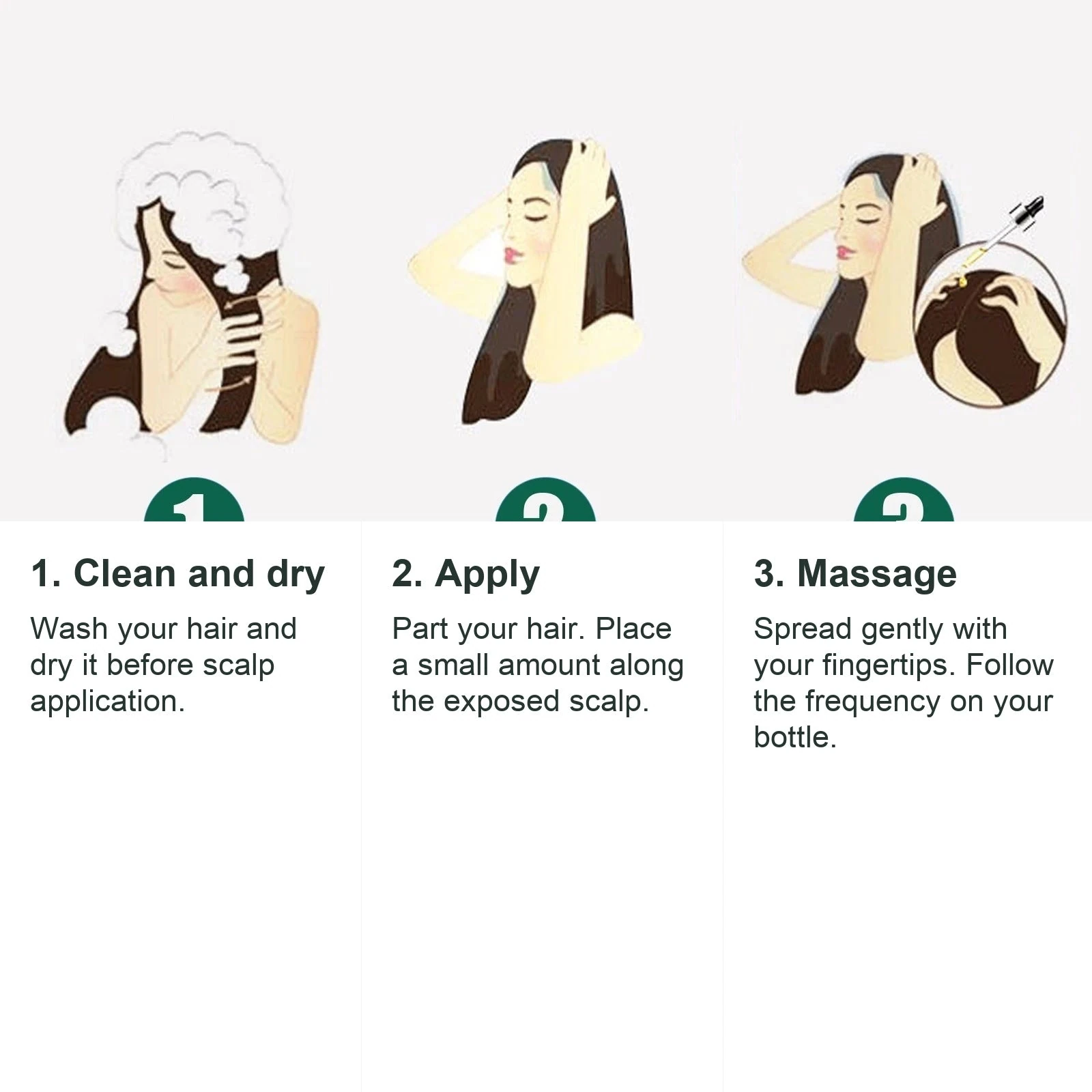
To use the green-label EELHOE ginger oil for hair and scalp, wash and dry your hair, part it to expose the scalp, apply a small amount and massage gently. Aim for the skin beneath the hair, rather than soaking the outer lengths. Use your own bottle’s instructions for frequency and any further steps.
Among the common ginger oil uses for hair, scalp application is often confused with smoothing the ends or doing a pre-shampoo oil treatment. Those routines use different products and instructions. This guide follows one specific example: the 30ml EELHOE green-label dropper oil sold by GinGrowth.
First, check which ginger oil you have
Look at the bottle, applicator and intended application area before choosing a method. “Ginger oil” can describe a finished scalp formula, a hair-length oil or a concentrated essential oil. A how-to video for one of these does not supply the directions for all three.
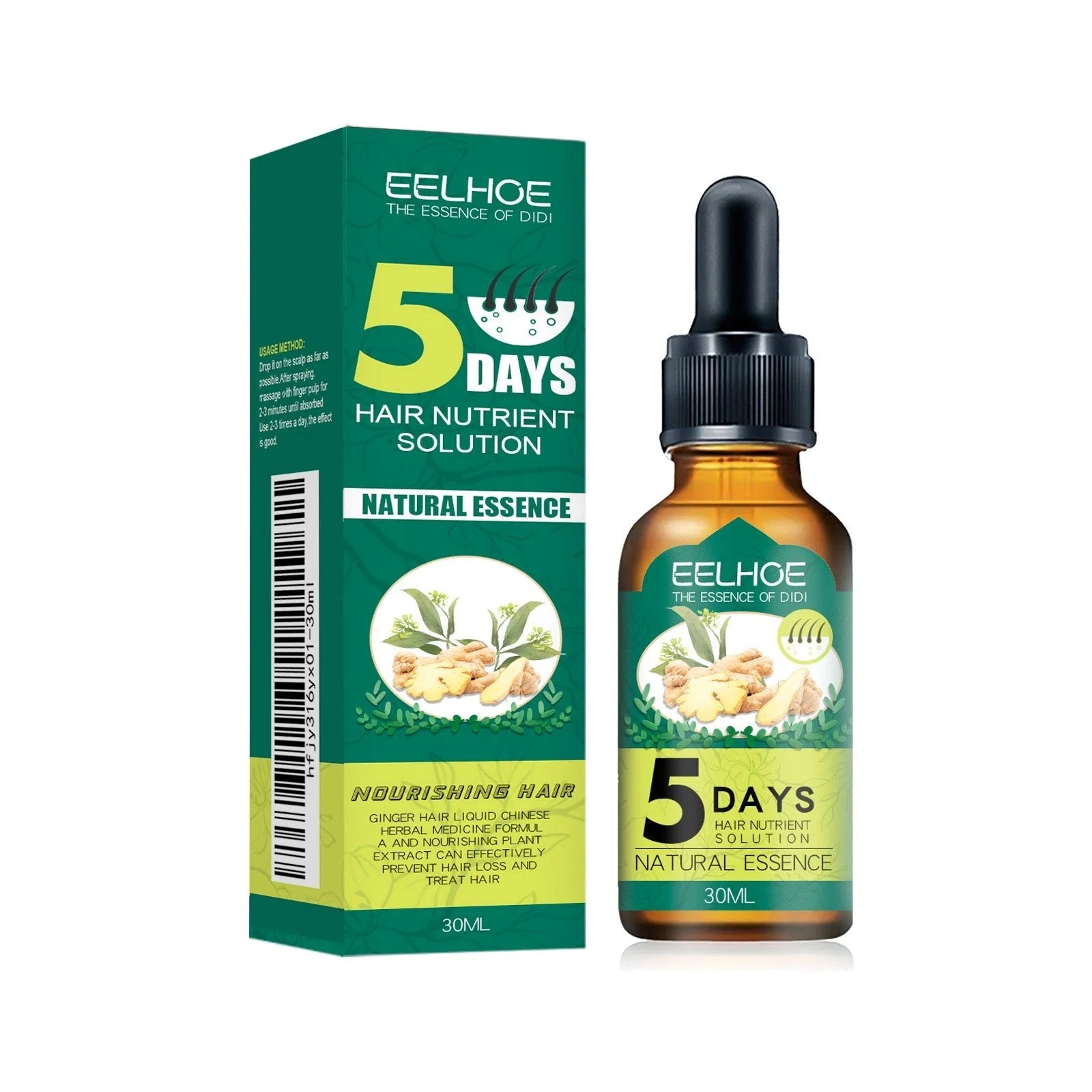
The ginger scalp oil with a dropper shown here is intended for scalp and root care after washing and drying. If your bottle is a spray or the black-and-gold pump, read its own directions before continuing. The applicator is a useful identifier, but the product label decides the method.
For a wider comparison of dispensers, our scalp serum application guide explains how to reach the scalp with a dropper or spray. The steps below focus on this ginger oil.
How to apply ginger oil to the scalp
- Wash and dry your hair.
- Make a parting to expose the scalp.
- Apply a small amount with the dropper.
- Spread gently with your fingertips.
- Check the finish and follow your bottle for frequency.
Scalp and roots are the target. You do not need to coat every strand.
1. Wash and dry before starting
Complete your wash routine, then dry your hair before using this oil. Keep conditioner on the areas recommended for your hair type, rinse as directed and avoid carrying a thick layer of other product into the scalp step.
The American Academy of Dermatology recommends concentrating shampoo on the scalp to remove buildup and excess oil, and using conditioner after washing. That helps distinguish cleansing the scalp from conditioning the lengths. The EELHOE product guide then places this oil after drying.
2. Make a parting you can actually see
Separate the hair so you can see the scalp where you intend to apply. Hold the surrounding hair aside. A clear parting makes it easier to place a small amount accurately and to see whether it has spread.
If the area is hard to reach, change the parting or your mirror position before adding oil. Dense hair calls for more careful access, not an automatic increase in the amount. Work with a manageable section instead of trying to cover the whole head in one pass.
3. Apply a small amount along the exposed scalp
Use the dropper to place the oil where the hair is parted. Keep control of the dispenser and avoid dragging the tip across the scalp. A small portion is easier to spread than a pool that runs toward the forehead or coats the surrounding strands.
The guide calls for a small amount and does not establish a fixed number of drops. A full pipette is not automatically one dose. Place carefully, distribute what you have applied, then follow the bottle’s amount instructions if further coverage is needed.
4. Spread with gentle fingertips
Use the pads of your fingers to distribute the oil over the intended area. Keep the movement comfortable and avoid scratching with your nails or rubbing the lengths together. The immediate job is to spread the product where you placed it.
Keep the movement comfortable and let the bottle guide the routine. The illustrated directions for this dropper oil specify gentle massage without a fixed timer.
5. Check the finish before adding anything else
Once the oil is distributed, notice whether the roots still feel manageable. If your hair looks coated, adding another layer is unlikely to improve placement. Keep the next application smaller or more carefully targeted within the product’s instructions.
Introduce one optional scalp product at a time so you can judge its finish clearly. If a product irritates the scalp, stop using it rather than trying to massage it in more firmly.
Should ginger oil go on the scalp or the ends?
Apply this EELHOE oil to the scalp and roots. If your reason for buying is rough ends, tangles or a finishing shine, look for care directed to the lengths. A small scalp bottle does not have to become an all-purpose oil for every part of your hair.
On mobile, swipe the table to compare all columns.
| Step | Where it belongs | What it does in this routine |
|---|---|---|
| Shampoo | Mainly the scalp, following its directions. | Cleanses before the oil step. |
| Conditioner | Ends or lengths as appropriate for your hair and formula. | Helps hair feel softer and easier to manage. |
| Green-label ginger oil | Exposed scalp and roots after washing and drying. | Provides a focused oil-based care and massage step. |
For example, if your ends feel rough but your roots already look oily, extra scalp oil does not address the area that needs attention. If you specifically want an oil step along the parting, a dropper offers a way to reach it without deliberately coating the ends.
How often should you use it, and should you rinse?
Follow the frequency and any rinse instructions on the bottle you own. The current illustrated guide for this green-label product establishes washing and drying before application, small-amount placement and gentle massage. It does not provide a universal rinse timer, overnight schedule or fixed weekly frequency.
Massage time, contact time and frequency answer different questions. A massage instruction does not tell you to leave an oil on overnight or repeat it every day. If your own label does not resolve those details, ask us about the exact bottle before choosing a schedule.
What if your roots look greasy afterward?
On mobile, swipe the table to compare all columns.
| What you notice | First thing to check | Adjustment to consider |
|---|---|---|
| Oil sits on top of the hair | Was the scalp visible? | Make a clearer parting before dispensing next time. |
| Product runs away from the parting | Was a large portion released at once? | Use smaller controlled portions within the label directions. |
| Roots feel coated | Was oil layered over other scalp products? | Review the amount and simplify the optional steps. |
| Rough ends are unchanged | Was the original concern in the lengths? | Review your conditioner or lengths-focused care. |
Choose the oil for the routine you want
The dropper format fits a deliberate, section-by-section scalp step. You can compare it with other bottles in the hair oil collection, keeping the intended area and directions beside the applicator when you decide.
Ginger oil application questions
How do I use ginger oil for hair growth?
Start with the method for the exact product. For this oil, wash and dry, part, apply a small amount and massage. More oil or harder massage does not establish faster growth; correct placement helps you use the cosmetic as directed.
Can I mix this oil into shampoo?
This product’s illustrated method places it after washing and drying. Follow that separate scalp step instead of changing the formula or mixing it into another bottle.
Does wet hair make the oil work better?
The current directions for this green-label product start after drying. Other oils may specify damp hair or a pre-wash routine, so keep the preparation attached to the exact formula.
Can I use the whole dropper at once?
The guide specifies a small amount, not a full dropper. Follow your bottle’s amount guidance and control the placement rather than assuming the pipette volume is a dose.
Sources and product information
Product images and instructions reviewed November 3, 2026. GinGrowth sells the EELHOE products shown. This guide compares product information and published research; it does not report a personal product test.