Ginger oil benefits for hair are mainly about oil-based conditioning and scalp care. A scalp-directed blend can provide an oil finish for gentle massage, while a dropper helps place small amounts along the roots. The finished formula determines the feel. Evidence on ginger ingredients does not establish regrowth from a bottled hair oil.
If you want to care for the roots but dislike oily lengths, start with where the product goes. A clear parting and controlled dispensing make that choice more practical. This guide uses the green-label EELHOE dropper oil sold by GinGrowth to show what to compare before buying.
What benefits should you look for in a ginger hair oil?
The most useful benefits are a conditioning oil layer, a manageable massage step and targeted placement. Choose a scalp formula when the roots are your focus. For softness and detangling through the lengths, compare conditioner or a product specifically directed to that area.
On mobile, swipe the table to compare all columns.
| Your goal | What to compare | What to notice |
|---|---|---|
| Targeted root care | A scalp-directed formula and an applicator you can control. | Oil reaches a visible parting instead of sitting on the hair surface. |
| A gentle massage step | The product’s method and whether you like its oil feel. | You can spread a small amount without pulling hair or scratching. |
| Softer-feeling lengths | A conditioner or hair-length oil with directions for the ends. | Hair is easier to manage where it actually feels rough. |
| More hair growth | Evidence for the finished product and the cause of thinning. | An ingredient story or a photograph alone cannot establish this result. |
An oil-based product can leave a conditioning layer. Whether that feels pleasant or heavy depends on the blend and amount. The sensible aim is a comfortable, manageable finish, rather than a scalp that looks as oily as possible. If your hair already loses volume quickly after washing, portion control matters particularly.
Does ginger oil make hair grow?
There is not enough product-specific evidence here to promise new growth from this ginger oil. A 2013 study of 6-gingerol tested an isolated compound in cultured human hair follicles and mice and observed growth suppression in those experimental conditions. It did not test this finished EELHOE oil and cannot predict its effect in a normal scalp-care routine.
When weighing the benefits of ginger oil for hair, keep everyday root care separate from a regrowth treatment. If a changing parting or ongoing shedding is your main concern, understanding the cause is the next useful step. For choosing a cosmetic oil, focus on the formula, placement and finish you want.
When does a dropper oil make sense?
A dropper is useful when you want to place a small fluid portion along a selected parting. It lets you work under the hair in sections, instead of misting a wide area or scooping cream from a jar. That makes it a practical option for someone who wants a deliberate root-care step after washing.
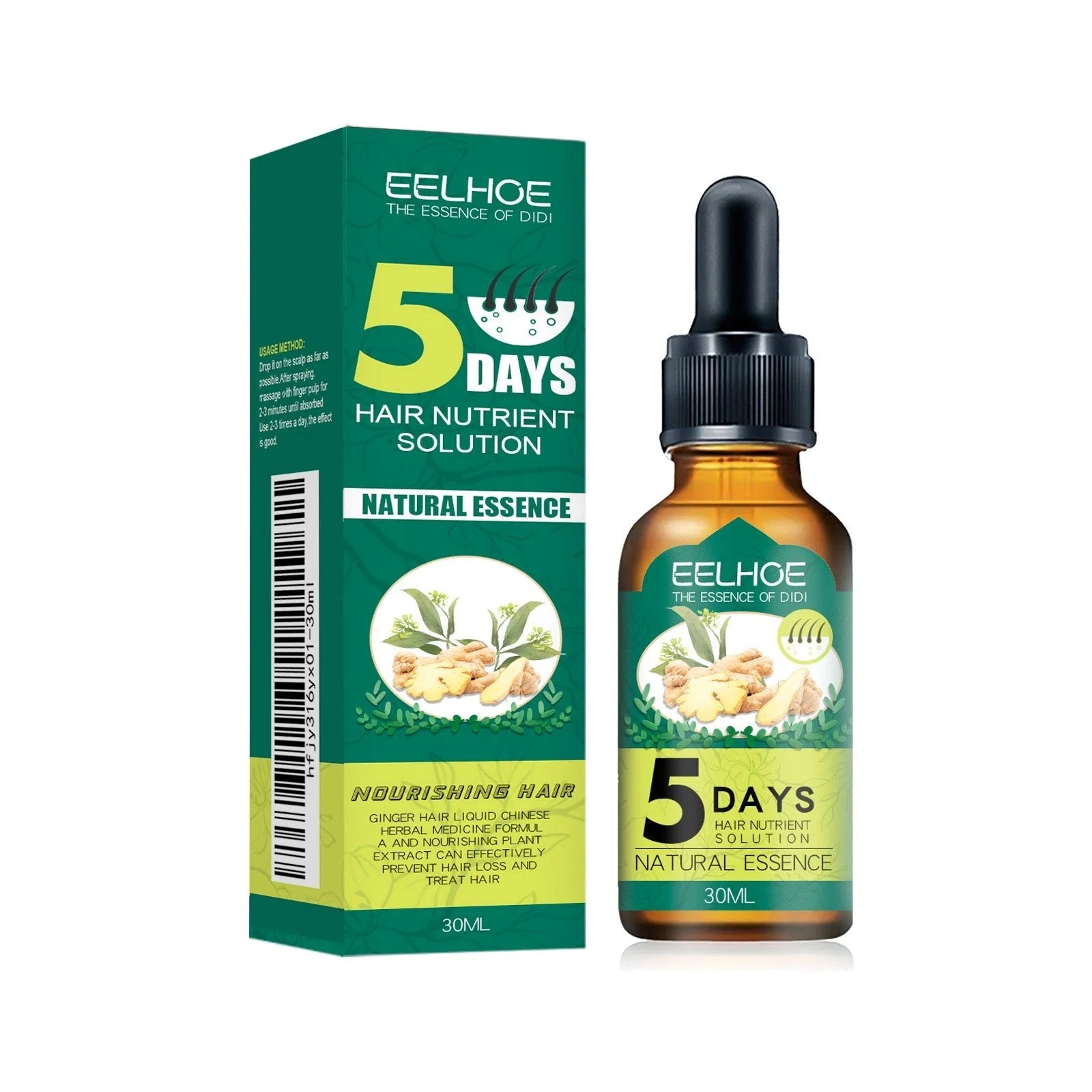
The EELHOE ginger scalp oil is directed to the scalp and roots after washing and drying. Its illustrated method is to part the hair, apply a small amount and massage gently. The bottle and its matching carton distinguish it from the separate blue spray and black-and-gold pump oil.
The appeal is controlled placement. If you normally put a large amount in your palms and smooth it over your hair, a visible parting gives you a much clearer target. You can then assess the finish before adding more. A dropper does not automatically make a formula lighter or stronger, so the formula and method still matter.
Is it a good fit for your hair routine?
A good fit: you want an oil-based step at the scalp and prefer a small dropper. Compare another format: you want water-based hydration, or your main concern is rough ends rather than roots.
Consider the dropper format if you enjoy an oil-based scalp step, can expose the partings easily and want to keep that step separate from conditioner on the ends. It also gives you a clear way to focus application on a selected area.
Compare another texture if an oil film is exactly what you dislike near the roots. Our hair tonic versus hair oil guide explains the difference between water-based and oil-based care. For a jar format, the scalp oil versus scalp moisturizer comparison covers fingertip placement and texture.
Keep rough ends on a separate track. The American Academy of Dermatology’s healthy-hair guidance recommends conditioner after washing, with placement adjusted to hair type. Putting more scalp oil on the roots does not replace care for lengths that tangle or feel dry.
What does a practical application look like?
For the green-label EELHOE oil, start after washing and drying your hair. Make a parting, place a small amount on the exposed scalp and spread it gently with your fingertips. Keep the application focused on the intended root area.
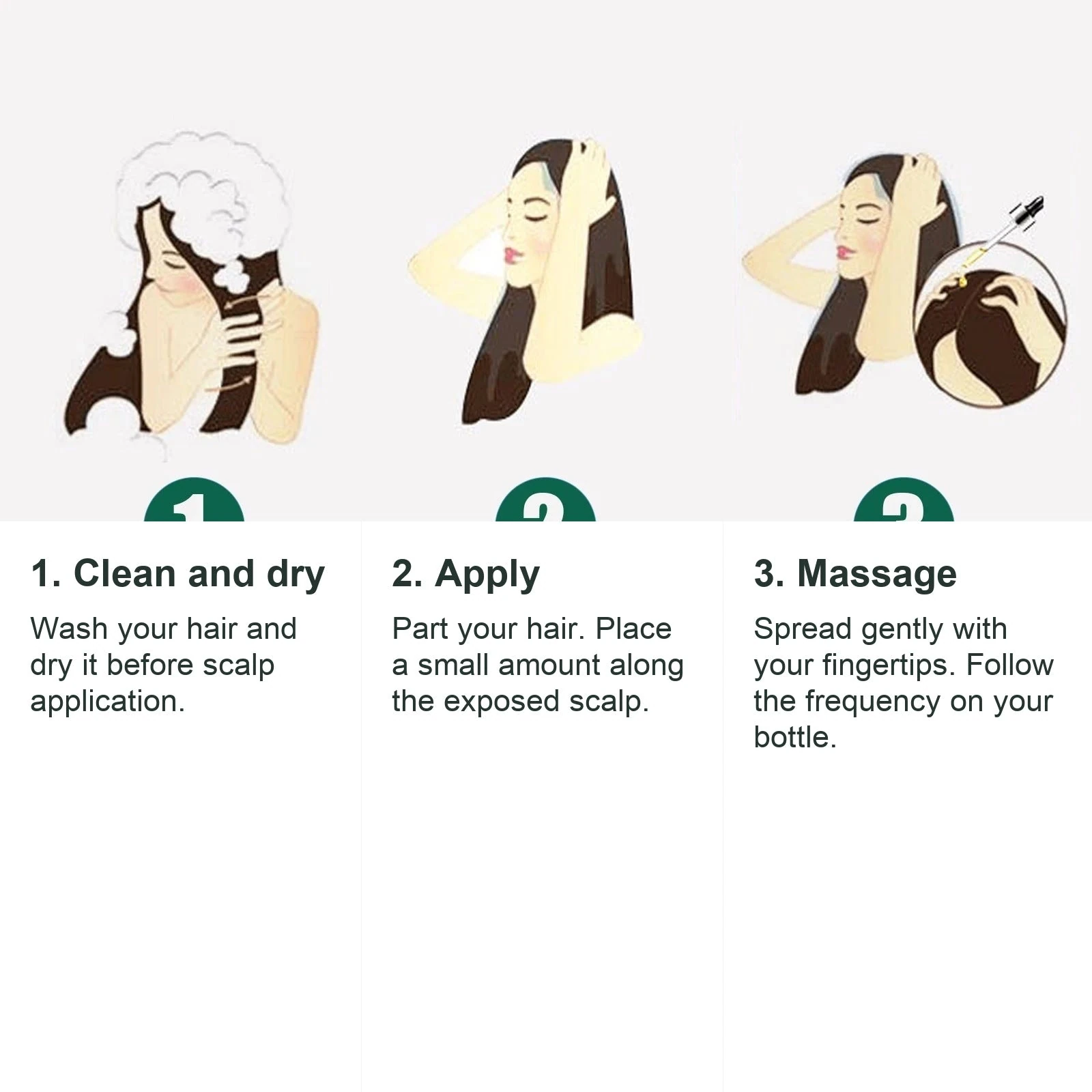
You do not need to wet every strand to reach the scalp. If your fingertips are spreading product mostly through the hair, make the parting clearer before dispensing more. Treat a full dropper as a container of oil, rather than assuming it is one required dose.
Afterward, check two things: does the scalp feel comfortable, and are the roots easy to arrange? Those observations help you judge whether the amount and format suit you. The illustrated guide does not specify a universal rinse timer or overnight treatment, so use the instructions on the exact bottle for those decisions.
What should you check before buying?
- Exact format: this example is the green-label 30ml dropper oil.
- Intended area: scalp and roots, reached through partings.
- Routine: washing and drying come before application.
- Ingredient information: check the exact label for ingredients you avoid. Do not borrow the formula of a different EELHOE bottle.
- Your priority: choose a format you can place accurately and enjoy using.
If you are choosing between applicators, the hair oil collection shows the current options. Keep the green-label dropper in mind when precise placement along partings is your priority.
Questions about ginger hair oil benefits
Are ginger oil and ginger juice the same thing?
No. Fresh ginger juice, concentrated essential oil and a finished hair oil are different preparations. This guide discusses a bottled scalp-care product; its directions do not apply to a kitchen mixture.
Is an oil better than a ginger spray?
The better fit depends on the formula and application you prefer. A dropper places oil along a parting. A spray uses a nozzle, and some sprays are water-based while others contain oils. Compare the exact bottle.
Can ginger hair oil replace conditioner?
This scalp-directed oil has a different job. Keep conditioner on the areas recommended for your hair type and use the oil only as its own directions describe.
What should I notice after application?
Look at placement, comfort and residue. These help you judge whether the routine works for you; they do not measure new hair growth.
Where can I check the exact bottle instructions?
Use the product page and the label on your bottle. If an amount, frequency or rinse instruction is unclear, contact GinGrowth with the product name so you can confirm it before use.
Sources and product information
Product images and instructions reviewed November 3, 2026. GinGrowth sells the EELHOE products shown. This guide compares product information and published research; it does not report a personal product test.