Use hair oil on the hair state specified for its purpose: a length-care oil may allow damp or dry hair, while a scalp oil can have a different routine. For the green-label EELHOE ginger scalp oil in this guide, wash and dry your hair first, then apply along exposed scalp partings. Do not transfer that instruction to every finishing oil or pre-shampoo treatment.
The useful question is what you want the oil to do. Are you smoothing rough ends, preparing for a wash, or adding a targeted root-care step? Once you separate those jobs, the wet-or-dry decision becomes much easier.
On mobile, swipe the table to compare all columns.
| Your goal | Hair state to check | Where the product belongs |
|---|---|---|
| Scalp care with the green EELHOE ginger dropper oil | After washing and drying, as shown in its directions. | Exposed scalp and roots, reached through partings. |
| Conditioning or smoothing the lengths | Damp or dry only where your length-care product allows it. | The lengths or ends named on its label. |
| A finishing step after styling | Dry hair, if the finishing product gives that instruction. | The specific areas you want to smooth. |
| A treatment before shampooing | The preparation and contact time on that treatment’s label. | The area its directions specify; rinse or wash as directed. |
Scalp or ends: which part are you trying to care for?
Scalp oil goes on the skin beneath your hair; a length-care oil is selected for the strands. The distinction matters more than whether two bottles both say “hair oil.” An oil applied across the outside of your hairstyle may coat the lengths while barely reaching the scalp.
If your ends feel rough but the roots already look flat, putting more oil at the roots is unlikely to solve the problem you noticed. Keep your conditioning step directed to the lengths. The American Academy of Dermatology’s healthy-hair guidance recommends conditioner after washing, with placement adjusted to hair type: the ends for fine or straight hair, and the lengths for dry or curly hair.
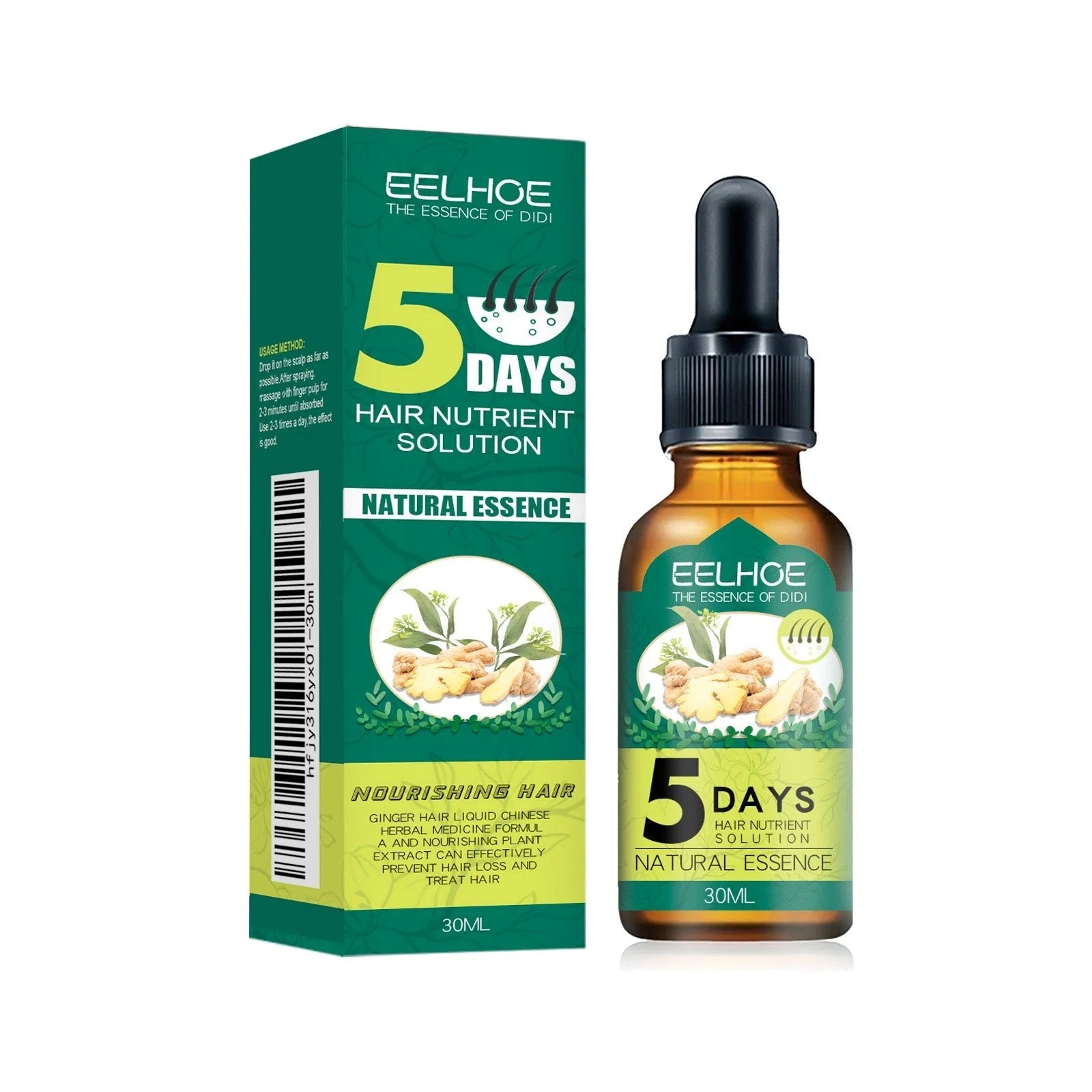
For root care, expose a parting before dispensing. The ginger scalp oil for use after washing and drying is a useful example because the green bottle, dropper and illustrated scalp routine are identifiable. You can see where that product belongs without treating it as an all-purpose shine oil.
What is the difference between wet, damp and dry hair?
Wet hair is still saturated; damp hair has had excess water removed; dry hair no longer feels wet at the area you plan to treat. These are practical descriptions, not a moisture-percentage test. If the scalp feels wet beneath a dry-looking outer layer, the preparation is not the same as a dry scalp.
For a product that allows damp lengths, gently remove excess water first. For the EELHOE scalp oil, follow its wash-and-dry sequence. There is no need to use hotter air just to hurry into the oil step. The AAD advises gentle drying and lower heat when using a blow dryer.
Dry hair also makes it easier to judge the finished appearance after a small application. Wet strands naturally lie together, so a flat look immediately after a shower does not tell you how much oil your hair needs. Judge the product in the state described by its directions.
How do you apply the EELHOE ginger oil after washing?
Wash, dry, part, apply a small amount and massage gently. That is the sequence shown for this scalp oil. The benefit of the dropper is placement: you can direct product along a visible part instead of pouring it over your hair.
- Finish cleansing and rinsing. Use your usual conditioner where appropriate, then rinse it out according to its instructions.
- Dry the hair and scalp area. Check underneath dense sections rather than judging only the outer layer.
- Make a clear parting. Move the surrounding hair aside so you can reach the scalp.
- Apply a small amount of oil. A full dropper is not automatically one dose. Follow the amount stated on your bottle.
- Massage gently with fingertips. Spread the oil over the intended area, then check comfort and the finish before adding more.
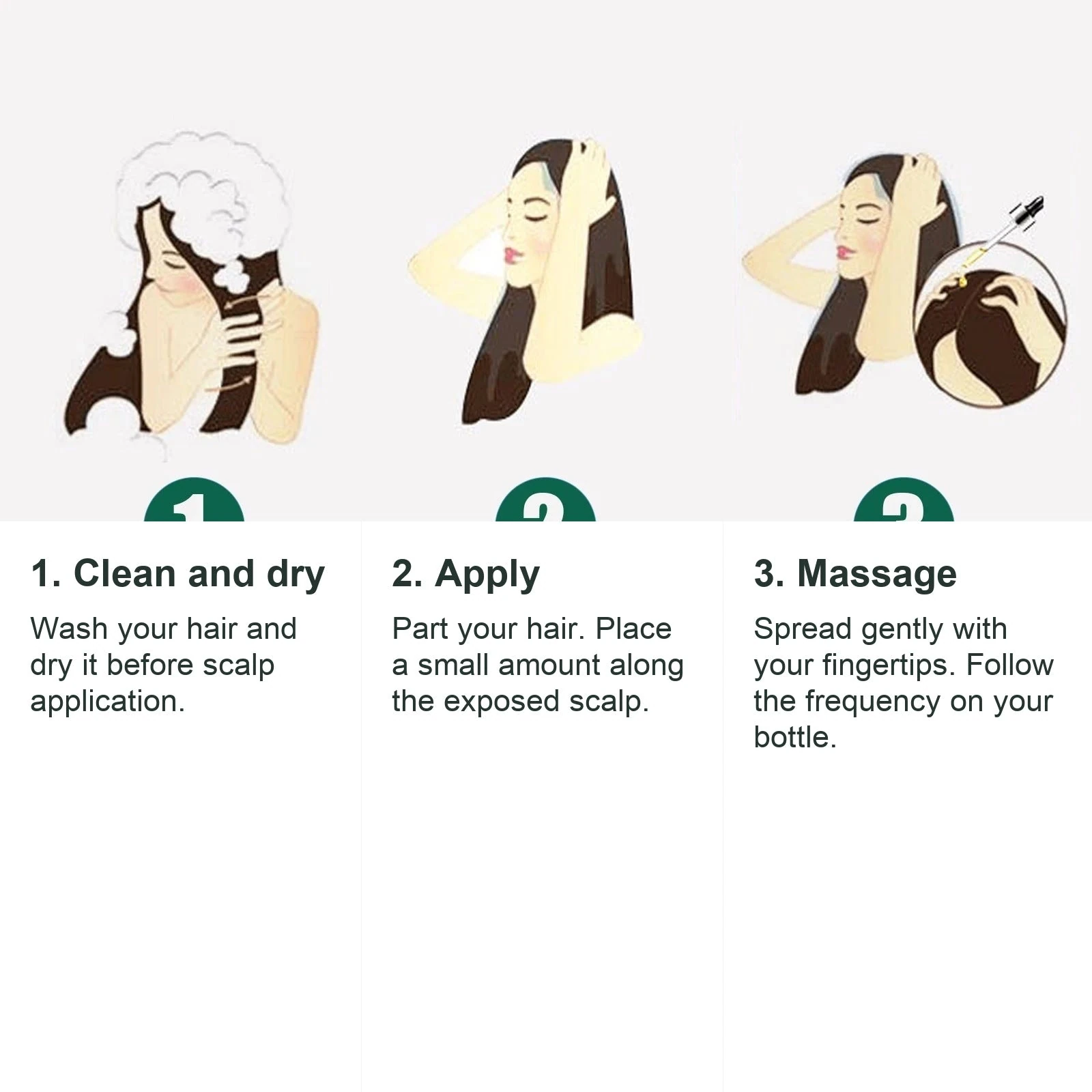
If oil keeps landing on the hair, improve the parting before dispensing again. This small adjustment can keep the application focused. Scrubbing harder or wetting the whole hairstyle with oil does not improve placement.
Does hair type change the wet-or-dry answer?
Hair type changes the amount, placement and texture you may prefer; it does not cancel a product’s instructions. Fine roots may become visibly coated with an amount that is less obvious in denser hair. Curly lengths may need conditioning even when the scalp does not need another oil layer.
For dense hair, expose smaller sections so you can reach the skin. For fine hair, keep the scalp step precise and avoid spreading excess through the fringe. If an oil texture is not what you want at the roots, compare the blue water-based ginger scalp spray. Water-based describes its formula, not permission to use it on dripping-wet hair; its own routine also starts after washing and drying.
Our hair tonic versus hair oil comparison helps with that format choice. This guide answers the application-state question; the comparison helps you decide which kind of bottle you want in the first place.
Which mistakes make oil feel heavier than expected?
Start with placement and portion size. Applying a scalp product to all the lengths, adding more before checking the first application, or layering it over another rich root product can make it harder to judge what works for you.
There is also no reason to add water directly to a finished bottle to make it feel lighter. Choose a suitable formula instead. A product should only be used as a heat protectant if its label specifically supports that use; the presence of oil alone does not establish heat protection.
If you are comparing options, the hair oil collection is the next place to check applicators and individual directions. For this green dropper, the clearest purchase reason is a focused scalp-care step you can place and spread with control.
Questions about hair oil on wet or dry hair
Should I put hair oil on wet or dry hair after a shower?
Check the exact oil. For the EELHOE ginger scalp oil shown here, dry first and then apply to the scalp. A separate length-care product may allow damp hair; use its own directions.
Should you put hair oil on wet or dry hair before bed?
Bedtime does not determine the correct hair state or contact time. Use an overnight routine only when the product’s directions allow it. The illustrated EELHOE routine does not establish an overnight treatment.
Do I need to wet my scalp again before applying the green oil?
No. Its directions start with washing and drying. Apply along exposed partings after that preparation, without adding a separate wetting step.
Can I use the same oil on my roots and dry ends?
Only if the product is directed to both areas. The green-label oil in this guide is presented for scalp and root care. Choose a product with length-care directions for your ends.
Sources and product information
By GinGrowth, which sells the EELHOE products shown. Product pages and original product images checked November 5, 2026. This guide uses label information and published guidance; it does not report a firsthand product test.