Yes, hyaluronic acid and vitamin C can generally be used in the same skincare routine. Hyaluronic acid helps retain moisture; vitamin C is used in care for dullness and uneven-looking tone. The order depends on the finished products and their directions. Apply compatible products separately, follow with moisturizer, and finish a daytime routine with sunscreen.
You do not automatically need two serums. If your moisturizer already provides the hydration you want, a separate hyaluronic acid step may add little to your routine. Start with the job that is missing, then choose products that sit comfortably together.
What does each ingredient do?
Cleveland Clinic describes hyaluronic acid as a substance with strong water-retaining properties that is used in moisturizers and serums. Its vitamin C guidance discusses topical vitamin C in skin-tone care. These are ingredient-level explanations, not a promise that every finished product performs identically.
On mobile, swipe the table to compare all columns.
| Your concern | The relevant role | What to compare |
|---|---|---|
| Skin feels short of hydration | Hyaluronic acid can support moisture retention | The full moisturizer or serum, how it feels, and the directions. |
| Skin looks dull or uneven in tone | A vitamin C product can be a tone-care step | The actual formula, routine position and tolerability. |
| Both concerns are present | The two roles can fit in one routine | Whether two separate serums are needed or one step already includes hydration. |
| The routine feels sticky or pills | Layering needs troubleshooting | Amounts, textures and order before buying another product. |
Healthline’s guide to hyaluronic acid and vitamin C describes using the ingredients together. Compatibility between the ingredient names does not remove the need to read the full formulas: a product called a hyaluronic acid serum may also contain exfoliating acids or other actives.

How to layer hyaluronic acid and vitamin C
Read both products’ instructions first. If either specifies dry skin, a particular sequence or separate use from another active, that direction takes priority over a generic layering rule. When there is no special instruction, lighter water-based products generally fit before heavier creams, but texture is a starting point rather than a guarantee of compatibility.
- Cleanse gently. Use toner if it already has a useful place in your routine.
- Apply the first serum as directed. Use the stated amount and distribute a thin, even layer.
- Let it settle before the next layer. If the first product is still pooling or moving around, avoid immediately rubbing another thick layer over it.
- Add the second product if needed. Follow its application directions, including whether it belongs on dry or slightly damp skin.
- Finish with moisturizer. In the daytime, sunscreen remains a separate final care step.
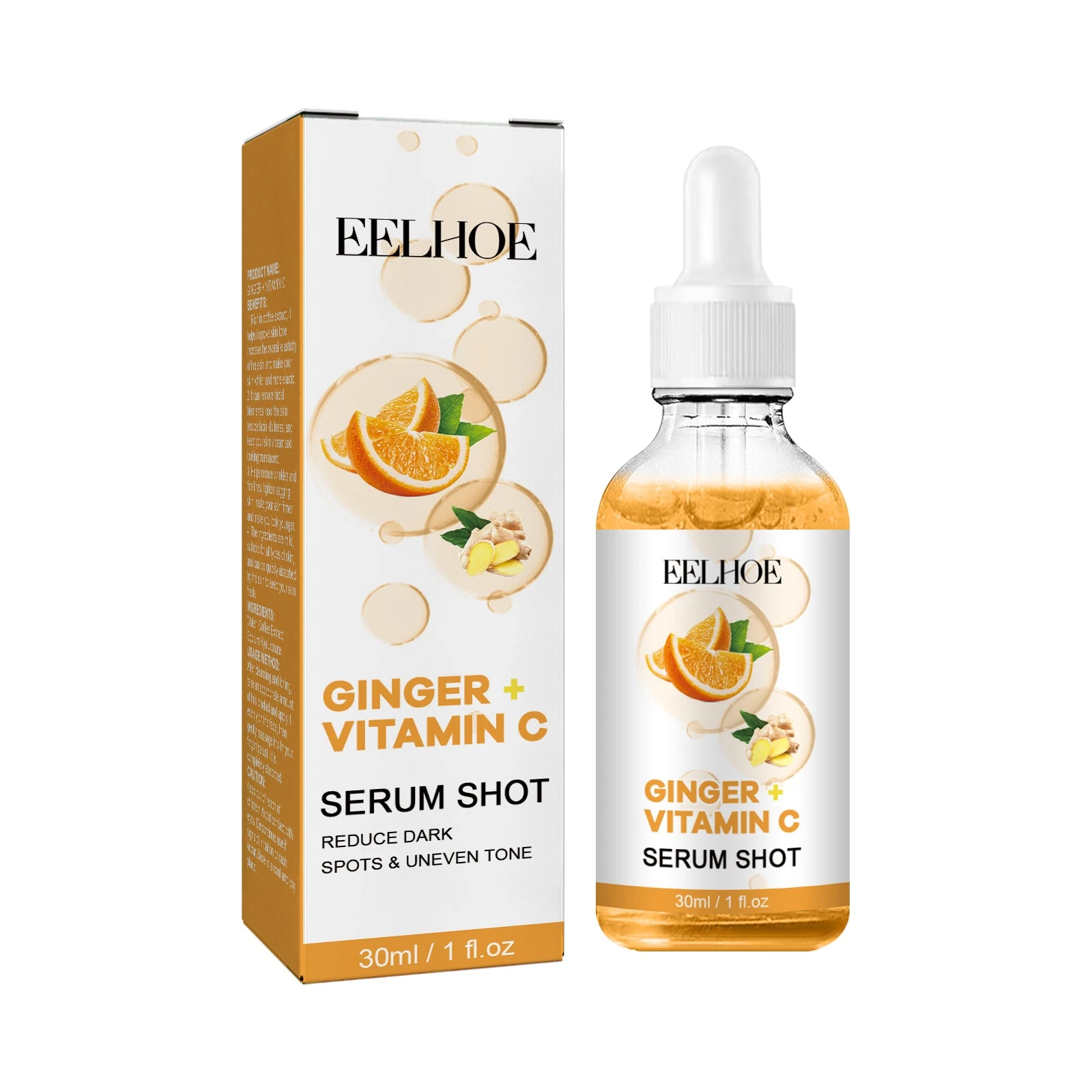
For the EELHOE orange serum specifically, the product page directs 2–3 drops after cleansing and toning, massaged gently until absorbed. That instruction places it before moisturizer. It does not establish a universal order relative to every hyaluronic acid product.

What if hyaluronic acid is already in your moisturizer?
Then the moisturizer can supply the hydration step after the vitamin C serum. You do not need to add a second bottle just to use both ingredient names. A routine that feels comfortable and is easy to repeat is more useful than one with several overlapping layers.
On mobile, swipe the table to compare all columns.
| Products you have | A practical starting sequence | Check before combining |
|---|---|---|
| Vitamin C serum + hyaluronic acid moisturizer | Cleanse → vitamin C serum → moisturizer | The moisturizer’s directions and any additional active ingredients. |
| Vitamin C serum + separate hyaluronic acid serum | Cleanse → serums in the order their directions support → moisturizer | Dry/damp-skin requirements, thickness and whether either layer pills. |
| A finished formula containing both ingredients | Use the single product as directed | Do not double its amount to replace two imagined steps. |
| Two products whose directions conflict | Use separate routines until the conflict is clarified | Ask the relevant brand instead of improvising a mixture. |
If the unresolved question is simply where moisturizer goes, see vitamin C serum before or after moisturizer. Keep the layering decision focused on the products you actually own.
Why do the layers pill or feel sticky?
Small rolls of product can occur when layers do not sit well together. Pilling alone does not prove that vitamin C and hyaluronic acid are chemically incompatible. The amount used, rubbing, the texture of the products and what is applied afterward can all be part of the problem.
Change one thing at a time. First return to the directed amount instead of using a full dropper by habit. Next, spread each layer evenly and let it settle. If that does not help, simplify the routine so you can identify which combination causes the rolls. Do not troubleshoot by using less than the directed amount of sunscreen.
Dry flakes and product rolls are not always the same thing. If your skin is persistently red, itchy or uncomfortable, stop the new combination and seek appropriate advice. More hydration serum is not a reliable fix for irritation caused by another ingredient.
How do you introduce the combination?
If both products are new to you, introduce them separately so you can tell how each feels. The American Academy of Dermatology’s small-area testing guidance is a useful starting point. A comfortable first application does not guarantee every combination will suit every person.
Once you know the individual products suit you, keep a short note of the order, amount and whether pilling occurs. Compare the same routine conditions instead of changing cleanser, serum and moisturizer all at once. There is no need to turn this into a daily photo project if the immediate question is simply comfort.
For routine planning, read whether vitamin C serum fits better by day or at night and how often to introduce vitamin C serum. Browse ginger skin care when you know which step you need.
Questions about using the two together
Can I use hyaluronic acid with vitamin C every day?
They can fit in a regular routine, but frequency depends on the individual products and your skin’s tolerance. Follow both sets of instructions and introduce new products separately rather than starting several new steps at once.
Can you use vitamin C and hyaluronic acid together in one bottle?
A professionally formulated product may contain both. That does not make mixing two finished products into one bottle equivalent. Keep separate products in their original containers and apply each as directed.
Do I need to wait a fixed number of minutes between them?
There is no universal waiting time for every formula. Follow any specified interval. Otherwise, let the first layer settle before adding the next, and simplify the amount or combination if the products pill.
Does the orange EELHOE serum contain the green hyaluronic acid formula?
No. The orange Ginger + Vitamin C Serum Shot and the green celery-and-hyaluronic-acid serum pictured in the range are separate formulas. The orange listing is one 30ml bottle, not a set of three serums.
Sources and product information
By GinGrowth, retailer of the EELHOE products shown. Product information and original images checked November 7, 2026. This guide draws on product directions and published guidance; it does not report a firsthand product test.