Expect visible vitamin C skincare changes to take time: Cleveland Clinic advises allowing about three months to really see effects. That is general guidance from dermatologist Melissa Piliang, MD, in its vitamin C serum article, not a fixed deadline for every bottle or dark spot. The formula, your concern and the routine around it affect what you may notice.
A fresh-looking finish after application and a gradually more even-looking complexion are different observations. Decide which one you are tracking before you compare photos or change products. Otherwise, a glossy serum layer can look like overnight progress, while a familiar dark mark may seem unchanged from one day to the next.
What does the three-month reference actually mean?
It is a useful expectation for reviewing visible changes over time, rather than judging a serum after a handful of uses. Cleveland Clinic recommends a bare-face starting photo and another photo once a month. That approach makes gradual changes easier to assess without turning every morning into a verdict.
The guidance does not establish a product-specific EELHOE timeline. It also does not mean all concerns change together. A dry-looking surface, uneven overall tone and one persistent dark patch can have different causes and different courses.
On mobile, swipe the table to compare all columns.
| What you notice | What it can tell you | What it cannot establish |
|---|---|---|
| A smoother or fresher-looking surface after application | How the finished routine looks and feels | That a dark spot has already faded. |
| Comfortable use over repeated applications | Whether the routine is manageable so far | A guarantee of future tolerance or a specific result. |
| A consistent tone change across comparable monthly photos | A visible trend worth reviewing | That the serum alone caused every change. |
| No clear difference at your review point | A reason to check the routine and your goal | That a bigger dose will solve the issue. |
Keep the first comparison simple. Choose one area, one concern and one repeatable way to view it. If you are watching uneven-looking cheek tone, a different camera filter or stronger bathroom light can matter more to the photograph than a small real change.
Do dark spots follow the same timetable?
Dark spots can take longer, and their cause matters. The American Academy of Dermatology’s guide to dark spots in darker skin tones explains that once the cause is found and stopped, a spot a few shades darker than the surrounding skin often fades within 6–12 months; deeper pigment can take longer. That describes a general fading course, not the treatment duration of this serum.
The AAD lists vitamin C among ingredients that can help fade existing dark spots. It also emphasizes addressing the trigger and using sun protection. If new irritation, acne or repeated sun exposure keeps producing new marks, the story is more complicated than waiting for one cosmetic to work.
For dark-spot care, the AAD recommends tinted sunscreen with iron oxide as well as broad-spectrum, water-resistant SPF 30 or higher. The tint can help protect against visible light, which matters for pigmentation. Serum does not replace that protection.
A cosmetic brightening routine is also different from evaluating a new or changing lesion. Have concerning skin changes assessed rather than treating every mark as a spot to fade. Persistent or worsening pigmentation may benefit from a dermatologist’s assessment of its cause and suitable options.
What can change the results you see?
The actual formula matters. The words “vitamin C serum” cover products with different ingredient forms, supporting ingredients and packaging. Cleveland Clinic discusses these distinctions, including sensitivity to heat and light. Check the full product information and storage instructions rather than choosing solely by the size of a percentage printed elsewhere.
For the orange EELHOE bottle, the confirmed highlights are ginger and vitamin C, with a cosmetic focus on dullness, visible dark spots and uneven-looking tone. The reviewed information does not establish its vitamin C concentration or a tested time-to-result. A timeline from another brand should remain attached to that brand’s formula.

Application consistency, other skincare and sun protection also affect the comparison. If you add a new exfoliant, change sunscreen and start the serum together, any visible change belongs to that combined routine. You can still record it; just avoid crediting one bottle with more than your observations support.
Storage is part of caring for the bottle. Close it after use and follow its label. A change in color, smell or texture calls for checking product condition and manufacturer advice rather than using more to compensate. The orange packaging itself is not an oxidation test.
How do you take comparison photos that are useful?
Photograph the same bare-skin area under the same conditions, then compare at a consistent interval. Cleveland Clinic’s once-a-month suggestion is a practical starting point. The method below makes that comparison less vulnerable to changes in light, angle and surface shine.
- Pick one concern and area. For example, track uneven-looking tone on the same cheek rather than the whole face one month and a close-up spot the next.
- Keep lighting and position consistent. Use the same room, camera, distance and angle. Avoid filters and beauty modes.
- Use comparable bare skin. Take the photo before makeup or a freshly applied shiny layer, with skin dry and in a similar state each time.
- Save the date and routine notes. Include the product, actual use pattern, sunscreen and any new treatment.
- Review monthly images side by side. Write what you can see, including “no clear change,” without trying to force a positive conclusion.
On mobile, swipe the table to compare all columns.
| Record | Your entry | Keep it comparable |
|---|---|---|
| Starting point | Date, target area and concern | Save the original photo without edits. |
| Monthly photo | Date and file name | Use the same light, distance and bare-skin state. |
| Routine changes | New products, pauses or other treatment | Explain changes in the routine rather than hiding them. |
| Observation | Less visible contrast, unchanged or another description | Describe the image without inventing a percentage improvement. |
| Next step | Continue as directed or seek advice | Use the goal and comfort record to guide the decision. |
This is a blank personal tracking method, not a before-and-after claim. Phone photographs are useful records but are not calibrated clinical measurements. A small difference in one image should be checked against the broader set before you draw a conclusion.
How does the orange EELHOE serum fit?
Choose the EELHOE ginger vitamin C serum for uneven-looking tone when you want a defined brightening-care step before cream. It is the orange 30ml Ginger + Vitamin C Serum Shot, supplied as one dropper bottle. The directions use 2–3 drops after cleansing and optional toner, spread evenly and massaged until absorbed.
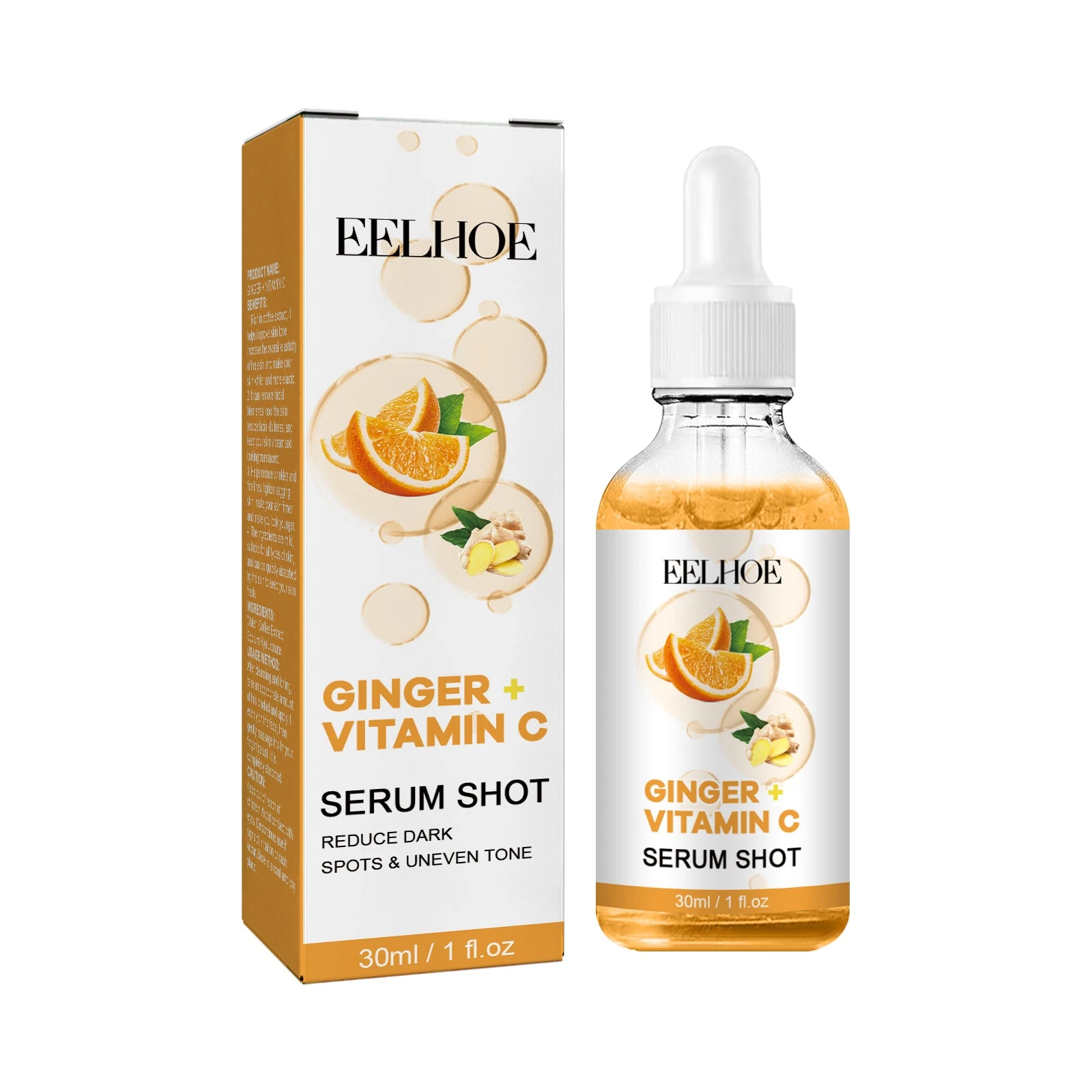
Follow with moisturizer and daytime sunscreen. Our serum and moisturizer order guide explains that sequence. Keep the portion consistent while you review the routine; an extra-full dropper is not an evidence-based shortcut to faster brightening.
The ginger skincare collection is useful if you are still comparing formats. Choose for the cosmetic concern and application style you actually want, then use a clear baseline rather than expecting a new bottle to reproduce someone else’s photograph.
What if you cannot see a change?
Review the basics first: the exact formula, label directions, consistency, bottle condition, sun protection and comparable photographs. A routine that was interrupted repeatedly is different from the same labeled routine maintained over time. A new irritation problem also deserves attention before you continue.
If there is still no useful change at your review point, reassess the goal and seek advice where appropriate. You do not have to keep increasing frequency or buy several more brightening products. For persistent pigmentation, a dermatologist can help identify what you are dealing with and which options fit.
Questions about vitamin C serum results
How long does it take vitamin C serum to work on uneven-looking tone?
Cleveland Clinic gives about three months as general guidance for seeing effects. Individual formulas and concerns vary; use comparable photos and do not treat that reference as a guaranteed EELHOE deadline.
Does vitamin C serum work if I cannot feel it tingling?
Tingling is not an effectiveness test. Judge a suitable routine by comfort and appropriate longer-term observations. Stop a product that burns or stings rather than taking irritation as proof of results.
Will using more serum make results appear sooner?
There is no basis here for that claim. Keep to the labeled amount and frequency. The orange EELHOE method uses 2–3 drops for one application.
Can I compare a makeup photo with a bare-face photo?
That is not a useful like-for-like comparison. Keep makeup, lighting, camera settings and skin surface conditions consistent so you can see the area you are tracking.
Sources and product information
By GinGrowth, which sells the EELHOE products shown. Product pages and original product images checked November 6, 2026. This guide uses label information and published guidance; it does not report a firsthand product test.